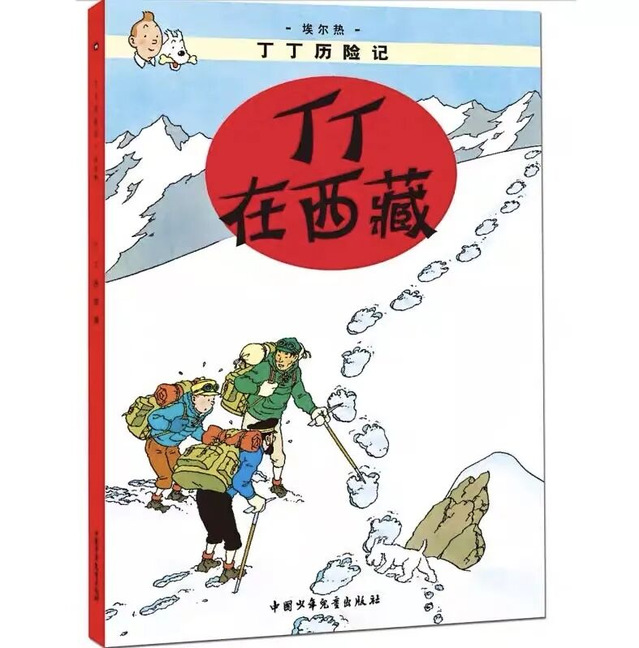
For decades, the image of Tibet in the Western cultural imagination has been shaped by a variety of fictional narratives and romanticized portrayals that often bear little resemblance to reality. From the utopian “Shangri-La” conjured up in Western literature to the snow-covered land of friendship depicted in Tintin in Tibet, generations of Westerners have formed their earliest impressions of this distant region of China through books, stories and legends.
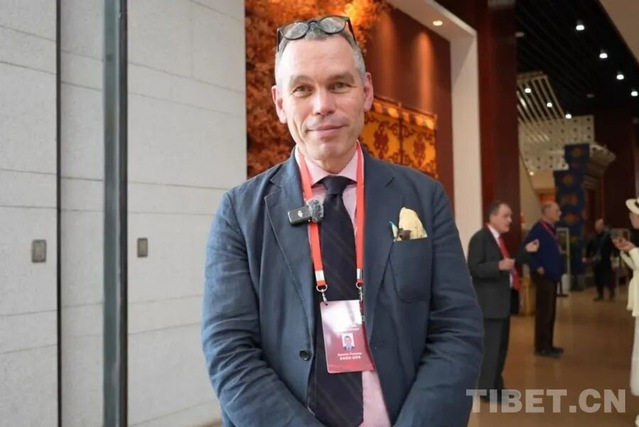
Swiss scholar Dominik Pietzcker grew up in such a cultural environment. As a child, the books in his grandfather’s library painted for him a picture of a remote and mysterious land of snow. Years later, after dedicating himself to the study of social transformation and regional development, he traveled to Xizang with a researcher’s perspective. Today, he seeks to share with others a picture of a real Xizang—one that has shed its mythical filter and is undergoing vibrant and profound changes.
A Western Imagination Constructed Through Narratives
Various literary and artistic works that have circulated in Europe for decades shaped Pietzcker’s early understanding of Tibet. Some of these works celebrate friendship and cultural exchange, while others present one-sided depictions detached from reality. Still others deliberately distort history. Together, they have contributed to a complex and, at times, inaccurate perception of Tibet in Western societies.
One representative example is Tintin in Tibet. “In the 1930s, Belgian cartoonist Hergé created the famous reporter Tintin, whose adventures took him all over the world, including Tibet,” Pietzcker explained. “The profound friendship between Tintin and a young Chinese man portrayed in the story remains one of popular culture’s classic examples of peaceful cross-cultural interaction.”
Yet over time, such idealized visions increasingly drifted away from reality. In Lost Horizon, British novelist James Hilton created the fictional paradise of “Shangri-La” largely on the basis of second-hand information. The novel resonated with the spiritual aspirations of many Western readers of its era and gained worldwide popularity. At the same time, however, it transformed a romantic fantasy into a lasting label through which many Westerners came to view Tibet.
If romanticization represents one form of misunderstanding, works that deliberately distort history have had even more damaging consequences. Some portrayals idealized the feudal serfdom system of old Xizang while ignoring the hardships endured by ordinary people. By presenting a backward social order as a so-called earthly paradise, such narratives have long misled Western audiences and obscured historical realities.
“Much of the Western literature about Tibet reflects a distinctly European sentiment,” Pietzcker said. “We are often drawn to places that seem exotic, mysterious and isolated from the outside world.”
He admitted that he, too, was once influenced by these narratives. However, as his research deepened and his field investigations expanded, he came to realize that neither romantic fantasies nor politically motivated misinformation bears much resemblance to reality.
“Today's Xizang is a truly fascinating place,” he said.
Measuring Real Progress Through Data
In Pietzcker’s view, legends and imagination are poor tools for assessing a region’s development. Objective data provide a far more reliable basis. Citing the work of renowned French anthropologist Emmanuel Todd, he noted that infant mortality is one of the most important indicators of a society’s long-term progress and stability. Beyond reflecting healthcare capacity, it also captures broader conditions such as public health, education, social welfare and social cohesion.
“Before the peaceful liberation of Xizang, medical services were extremely limited, and infant mortality was widespread,” Pietzcker said. “Today, the infant mortality rate has fallen to 4.32 per thousand live births. This figure is lower than those of some European Union countries, including Romania and Bulgaria, and is also below that of the United States.” Other healthcare indicators tell a similar story. The hospital delivery rate for pregnant women in Xizang has reached 99.34 percent, while the region has approximately 3.68 licensed (assistant) physicians per 1,000 residents—a level of medical resource allocation comparable to that of France.
“These figures do not lie,” Pietzcker emphasized. “Only a society that consistently prioritizes people’s well-being and invests systematically over decades can achieve such remarkable progress in healthcare.”
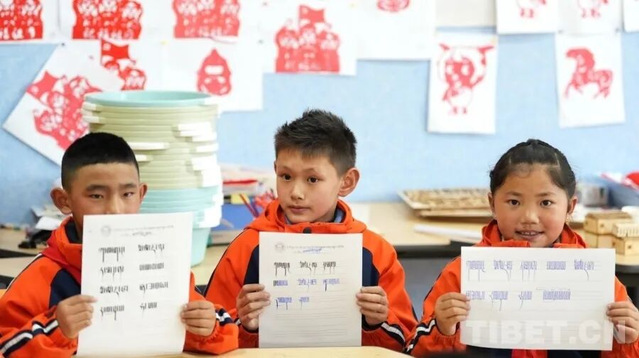
Behind these advances, he argues, lies the expansion of universal education. Before the peaceful liberation, more than 95 percent of Xizang’s population was illiterate, and education was largely reserved for a privileged few. Today, nine-year compulsory education covers the entire region. Boys and girls alike enjoy equal access to schooling, and increasing numbers of young women are entering universities.
“With education comes knowledge and intellectual emancipation,” Pietzcker said, describing one of his strongest impressions during his fieldwork in Xizang. He observed that education has opened up new opportunities for countless children from farming and herding families, enabling them to pursue futures far beyond what previous generations could have imagined.
“From a sociological perspective, education is one of the most important drivers of social mobility and personal independence,” he noted. “An educated society possesses economic potential that an illiterate society simply cannot match.” He pointed to another striking statistic: over the past six decades, average life expectancy in Xizang has risen from 35.5 years to 72.5 years in 2025. “This is not a modest increase—it is a dramatic leap,” Pietzcker said. “A child born in Xizang today can expect to live more than twice as long as his or her grandparents.”
A Land Where Tradition and Modernity Coexist
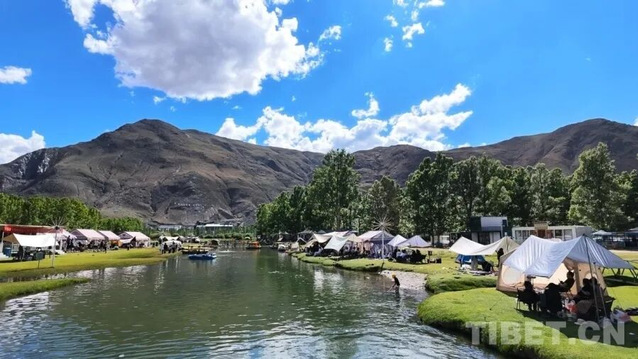
During visits to cultural heritage sites and natural landmarks in Lhasa, Pietzcker was impressed by how Xizang has advanced toward modernization while continuing to preserve its cultural traditions and ecological environment. Ancient monasteries remain active centers of religious life, traditional customs continue to be passed down through generations, and modern infrastructure has expanded across the plateau.
“Xizang is no longer the isolated place imagined by many Westerners,” Pietzcker said. “Its infrastructure, transportation network and accommodation facilities have reached standards comparable to those found elsewhere in China.”
Responding to claims by some Western observers that Xizang should remain in its “original” state and resist modernization, Pietzcker described such arguments as a clear double standard.
“If we want things to remain alive, they must be allowed to change,” he said, quoting the famous line by Sicilian writer Giuseppe Tomasi di Lampedusa. “Social transformation is never easy. But Xizang’s development demonstrates that when a society is genuinely committed to improving people’s lives, it is possible to achieve rapid progress while preserving cultural traditions.”
For those in the West whose understanding of Xizang is still shaped primarily by old books and legends, Pietzcker has a simple message:
“Set aside outdated romantic fantasies and come visit Xizang for yourself. You will discover that the most fundamental aspirations—equal access to education, better health and longer lives—have already become realities here. There may be no fictional ‘Shangri-La,’ but what you will find is something even more remarkable than any legend.”